Types of Home Decor Styles Every Homeowner Should Know
Have you ever walked into a beautifully designed room and immediately felt at home? Sometimes it’s the cozy textures, sometimes it’s the clean lines, and other times it’s simply the way everything comes together. Understanding the types of home decor styles can help you discover exactly what design approach resonates with your personality and lifestyle.
Choosing a decorating style isn’t just about following trends. It’s about creating a space that reflects who you are and supports how you live. From sleek modern interiors to warm farmhouse spaces and eclectic bohemian retreats, every design style tells a unique story.
The challenge is that there are so many options available today. Understanding the defining characteristics of different decorating styles can help you make confident design decisions and create a cohesive home that feels both beautiful and functional.
Why Understanding Home Decor Styles Matters
Interior design styles serve as a foundation for decorating decisions.
Without a clear direction, it’s easy to purchase furniture and accessories that don’t work well together. Understanding various styles helps create consistency throughout the home.
Benefits of Choosing a Defined Style
A clear design direction can:
- Simplify decorating decisions
- Improve visual harmony
- Reduce unnecessary purchases
- Create a cohesive atmosphere
- Increase long-term satisfaction
Learning about the different types of home decor styles allows homeowners to develop spaces that feel intentional rather than random.
![Collage of modern, farmhouse, coastal, and bohemian living room styles]
Modern Interior Design
Modern design is one of the most recognized decorating styles worldwide.
What Defines Modern Style?
Modern interiors focus on:
- Clean lines
- Minimal ornamentation
- Functional furniture
- Open layouts
- Neutral color palettes
The emphasis is on simplicity and efficiency.
Common Modern Design Elements
You’ll often find:
- Glass surfaces
- Metal accents
- Geometric shapes
- Neutral tones
- Minimal decor
Modern spaces feel clean, organized, and sophisticated.
Contemporary Style
Although often confused with modern design, contemporary interiors are distinct.
Characteristics of Contemporary Spaces
Contemporary design reflects current trends while maintaining simplicity.
Common features include:
- Curved lines
- Mixed materials
- Large windows
- Neutral foundations
- Bold accent pieces
The style continues evolving over time.
Traditional Interior Design
Traditional design draws inspiration from classic European decor.
Hallmarks of Traditional Style
Traditional interiors often feature:
- Rich wood furniture
- Elegant fabrics
- Symmetrical layouts
- Decorative molding
- Classic artwork
These spaces prioritize comfort and timeless elegance.
Color Palettes
Popular traditional colors include:
- Cream
- Beige
- Navy
- Burgundy
- Forest green
These shades contribute to a warm and refined atmosphere.
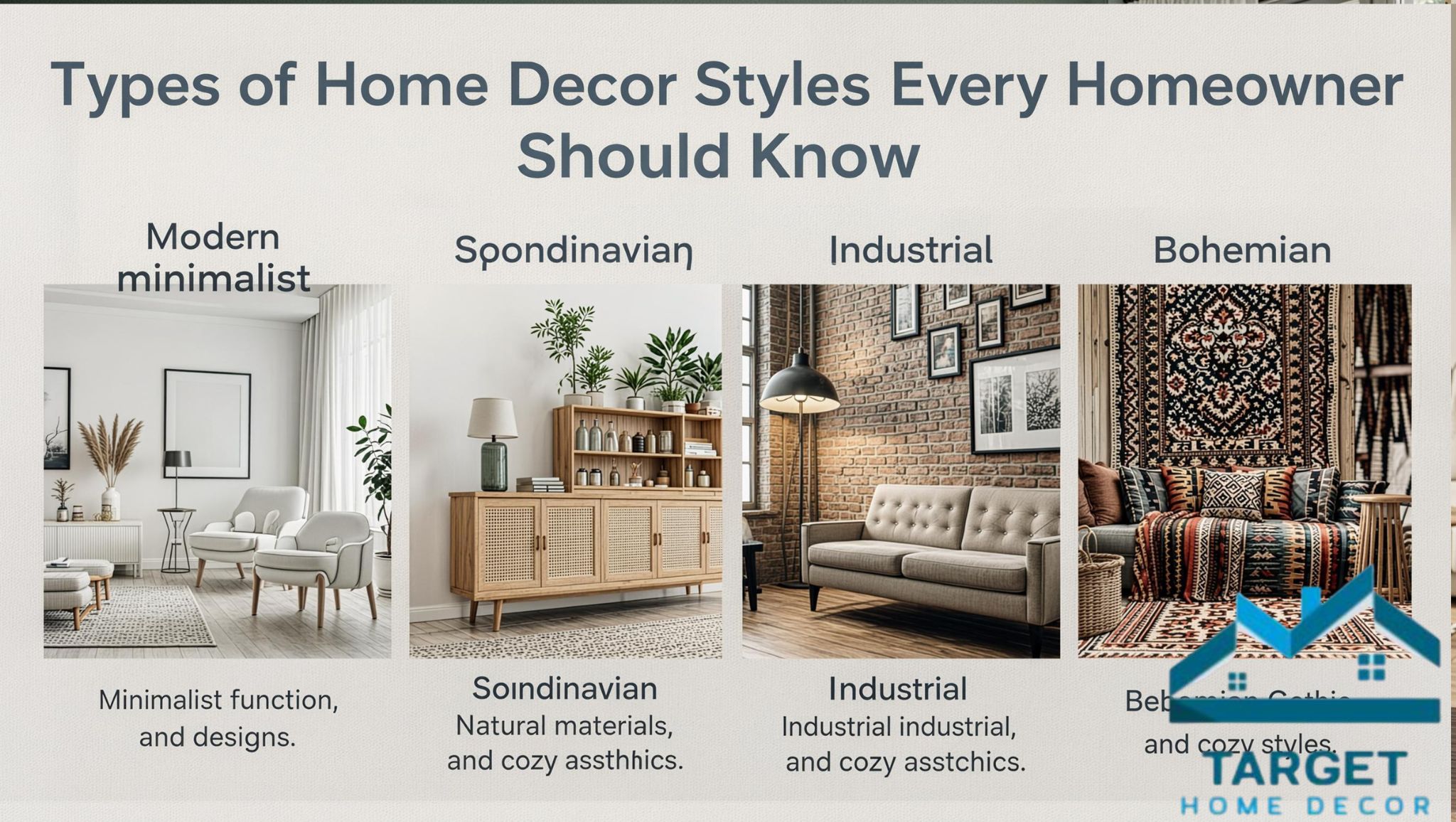
![Infographic comparing major interior design styles and their defining characteristics]
Farmhouse Style
Farmhouse decor remains one of the most popular types of home decor styles today. You may aslo read this: Art Deco Home Decor Ideas for Timeless Glamour.
What Makes Farmhouse Unique?
Farmhouse interiors combine rustic charm with modern comfort.
Common features include:
- Reclaimed wood
- Neutral colors
- Vintage accessories
- Open shelving
- Cozy textiles
The overall look feels welcoming and lived-in.
Modern Farmhouse Trends
Contemporary farmhouse spaces often include:
- Black fixtures
- White walls
- Industrial lighting
- Minimal clutter
This updated version balances rustic character with modern simplicity.
Scandinavian Design
Scandinavian interiors originated in Nordic countries and emphasize simplicity and comfort.
Core Principles
The style focuses on:
- Functionality
- Natural light
- Minimalism
- Comfort
- Quality craftsmanship
Every item serves a purpose.
Typical Scandinavian Features
Expect to see:
- White walls
- Light wood finishes
- Cozy textiles
- Simple furniture
- Natural materials
The result feels bright and inviting.
Bohemian Style
Bohemian design celebrates creativity and individuality.
Defining Characteristics
Boho interiors often include:
- Layered textures
- Global influences
- Vibrant colors
- Eclectic accessories
- Handmade decor
There are few strict rules, making the style highly personal.
Decorating Tips
To achieve a balanced bohemian look:
- Mix textures thoughtfully
- Use natural materials
- Incorporate greenery
- Display meaningful items
The key is curated creativity rather than clutter.
Coastal Style
Coastal design captures the relaxed feeling of life near the ocean.
Key Elements
Popular coastal features include:
- Soft blues
- White tones
- Natural fibers
- Driftwood accents
- Airy layouts
These details create a light and refreshing atmosphere.
Modern Coastal Design
Today’s coastal interiors avoid overly themed decorations and instead focus on subtle references to nature.
Industrial Style
Industrial design emerged from converted warehouses and urban lofts.
Characteristics of Industrial Interiors
Common elements include:
- Exposed brick
- Metal fixtures
- Concrete surfaces
- Open floor plans
- Raw materials
The aesthetic feels bold and authentic.
Color Palette
Industrial spaces often feature:
- Gray
- Black
- Brown
- Charcoal
- Metallic finishes
These tones enhance the urban character.
![Industrial loft living room with exposed brick and modern furnishings]
Mid-Century Modern Design
Mid-century modern remains one of the most influential interior styles.
Defining Features
This style emphasizes:
- Clean lines
- Organic shapes
- Functional furniture
- Large windows
- Minimal ornamentation
Many iconic furniture pieces originated during this era.
Why It Remains Popular
Mid-century modern furniture blends effortlessly with contemporary interiors, making it a timeless choice.
Rustic Style
Rustic interiors celebrate natural beauty and craftsmanship.
Common Rustic Elements
You’ll often find:
- Reclaimed wood
- Stone surfaces
- Warm colors
- Handmade details
- Cozy textiles
The goal is creating a comfortable and authentic environment.
Minimalist Design
Minimalism is more than a decorating style—it’s a philosophy.
Core Principles
Minimalist spaces prioritize:
- Simplicity
- Functionality
- Open space
- Neutral palettes
- Quality over quantity
Every item serves a purpose.
Benefits of Minimalism
Advantages include:
- Reduced clutter
- Easier maintenance
- Increased focus
- Calmer environments
Minimalist interiors feel peaceful and organized.
Japandi Style
Japandi combines Japanese minimalism with Scandinavian comfort.
Why Japandi Is Growing in Popularity
This style merges:
- Natural materials
- Clean lines
- Warm textures
- Functional furniture
- Neutral palettes
The result feels elegant, balanced, and welcoming.
Mediterranean Style
Mediterranean design draws inspiration from coastal regions of Southern Europe.
Signature Features
Common characteristics include:
- Arched doorways
- Textured walls
- Terracotta accents
- Natural stone
- Warm colors
These homes often feel sunny and inviting.
Eclectic Design
Eclectic interiors blend elements from multiple styles.
How to Decorate Eclectically
Successful eclectic spaces maintain balance through:
- Consistent color palettes
- Repeated textures
- Thoughtful furniture placement
- Personal collections
The style celebrates individuality while maintaining cohesion.
Luxury Modern Style
Luxury modern combines contemporary design with premium materials.
Features of Luxury Modern Interiors
Common elements include:
- Marble surfaces
- Designer lighting
- Custom furniture
- Statement artwork
- High-end finishes
These spaces feel sophisticated and polished.
How to Choose Between Different Styles
With so many types of home decor styles available, selecting one can feel overwhelming.
Consider Your Lifestyle
Ask yourself:
- Do you prefer simplicity or decoration?
- Do you entertain frequently?
- Do you have children or pets?
- How much maintenance are you comfortable with?
Practical considerations matter as much as aesthetics.
Gather Inspiration
Explore:
- Design magazines
- Social media platforms
- Home tours
- Furniture showrooms
Patterns will emerge that reveal your preferences.
Common Decorating Mistakes
Avoid these frequent errors:
- Mixing too many styles without a plan
- Following trends blindly
- Ignoring functionality
- Purchasing furniture too quickly
- Neglecting scale and proportion
- Overdecorating rooms
- Forgetting personal preferences
Successful interiors balance style with practicality.
FAQ
What are the most popular home decor styles?
Modern, farmhouse, Scandinavian, coastal, bohemian, industrial, and mid-century modern are among the most popular styles today.
Can I combine multiple decorating styles?
Yes. Many homeowners successfully blend styles when they maintain consistency in color, materials, and overall design direction.
Which style works best for small spaces?
Scandinavian, minimalist, and modern styles often work particularly well in smaller homes because they emphasize simplicity and functionality.
What is the difference between modern and contemporary design?
Modern design refers to a specific design movement, while contemporary design reflects current trends and continues evolving over time.
How do I find my decorating style?
Explore inspiration sources, identify recurring themes you enjoy, and consider your lifestyle needs.
Is farmhouse style still popular?
Yes. Farmhouse design remains popular, particularly modern farmhouse interpretations that blend rustic and contemporary elements.
What style is easiest to maintain?
Minimalist and Scandinavian interiors are often easier to maintain because they feature less clutter and fewer decorative elements.
Which home decor style has the most timeless appeal?
Traditional, Scandinavian, and mid-century modern styles are widely regarded as timeless choices.
Conclusion
Understanding the many types of home decor styles empowers homeowners to create spaces that truly reflect their personalities and lifestyles. Whether you’re drawn to the clean simplicity of Scandinavian design, the warmth of farmhouse interiors, the creativity of bohemian spaces, or the elegance of traditional decor, each style offers unique opportunities for self-expression. By learning the defining characteristics of different approaches and thoughtfully incorporating the elements that resonate most with you, it’s possible to create a home that feels beautiful, comfortable, and authentically yours.