
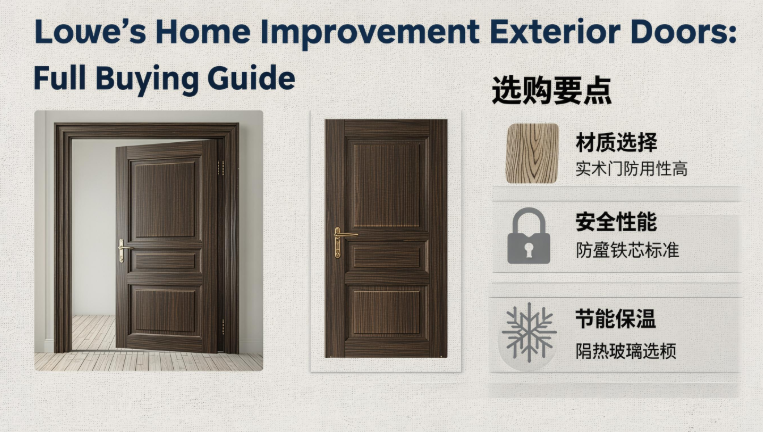
Lowe’s Home Improvement Exterior Doors: Full Buying Guide
Your front door does far more than open and close. It shapes the first impression of your property, helps protect the people inside, and plays an important role in comfort, energy efficiency, and daily convenience. Shoppers exploring lowe’s home improvement exterior doors will find plenty of attractive options, but the right decision depends on much more than color or price.
A door that looks perfect online can still be wrong for the opening, climate, swing direction, jamb depth, hardware, or installation conditions. Before buying, it helps to understand the main door types, materials, sizes, glass configurations, efficiency labels, security features, and installation choices.
A careful purchase can improve curb appeal while reducing drafts, sticking, water intrusion, and maintenance. A rushed purchase can lead to costly modifications, installation delays, or a door that never seals properly. The difference usually comes down to accurate measurements and a realistic assessment of the existing frame.
This guide explains how to compare exterior-door options at Lowe’s, choose between slab and prehung units, evaluate fiberglass, steel, and wood, and prepare for professional or do-it-yourself installation. It also covers patio doors, storm doors, security, energy performance, budgeting, and common buying mistakes.
Understanding Lowe’s Home Improvement Exterior Doors
The phrase lowe’s home improvement exterior doors covers several categories rather than one type of product. Lowe’s carries front entry doors, patio doors, French doors, sliding doors, storm doors, screen doors, security doors, commercial-style entries, and selected specialty options. Each category solves a different problem, so the first step is identifying where the door will be installed and what the opening needs to accomplish.
A main entrance may prioritize security, weather resistance, insulation, and appearance. A patio opening may emphasize natural light and convenient access to an outdoor area. A storm door may protect an existing entry while improving ventilation. A side or garage entrance may call for a simpler, highly durable design.
Front Entry Doors
Front doors are designed to provide a secure, weather-resistant entrance while supporting the architectural style of the home. Common designs include traditional raised panels, Craftsman-inspired layouts, contemporary flush surfaces, decorative glass, sidelights, and double-door configurations.
A solid or lightly glazed entry offers more privacy, while a larger glass insert can bring daylight into a dark foyer. Sidelights and transoms can make an entrance feel wider and more impressive, but they increase the size, price, and installation complexity of the unit.
Patio and French Doors
Patio doors connect interior rooms to decks, gardens, balconies, and outdoor living spaces. Sliding doors save floor area because the panels move along a track. Hinged French doors create a wide, traditional opening but require enough clearance for the panels to swing.
Compare panel operation, threshold height, screen availability, locking points, glass performance, and maintenance. A broad glass area can improve views and natural light, but it also makes thermal performance and professional sealing especially important.
Storm and Screen Doors
A storm door is mounted outside the main entry door. It can shield the primary surface from weather, create an additional barrier, and provide ventilation when fitted with an interchangeable or retractable screen.
Not every entrance benefits from one. Some manufacturers place limits on storm-door use because heat can build up between the two doors and affect dark finishes or certain materials. Check the main door’s warranty and exposure requirements before combining them.
Slab Doors Versus Prehung Doors
A slab is the door panel by itself. A prehung unit arrives mounted in a frame with hinges, a sill, and weatherstripping. This distinction affects measurements, labor, installation difficulty, and the likelihood of achieving a reliable weather seal.
A slab may work when the existing frame is square, structurally sound, correctly sized, and compatible with the replacement panel. A prehung unit is normally more practical when the frame is damaged, out of square, poorly sealed, or being replaced completely.
When a Slab Replacement Makes Sense
Choose a slab only after confirming that the current jamb, threshold, hinges, and weatherstripping remain in good condition. Record the existing panel’s width, height, thickness, hinge spacing, lock preparation, and edge shape.
Even a small mismatch can cause binding or leave uneven gaps. A carpenter may be able to modify a slab, but the additional labor can remove much of the initial price advantage.
Why Prehung Units Are Popular
A prehung system provides a coordinated door, frame, sill, hinges, and sealing components. It is still not a simple drop-in product. The rough opening must be prepared correctly, and the unit must be installed plumb, square, level, flashed, insulated, and sealed.
For many replacement projects, a prehung system offers a cleaner way to correct old frame problems. It is also commonly used when changing the entrance size, adding sidelights, or rebuilding the entire opening.
Compare Fiberglass, Steel, and Wood
Material affects appearance, maintenance, dent resistance, moisture performance, insulation, and long-term durability. Lowe’s home improvement exterior doors are commonly available in fiberglass, steel, and wood, with variations in core construction, surface texture, finish, and glass.
No material is ideal for every property. Climate, direct sunlight, porch protection, household use, maintenance expectations, and architectural style should guide the selection.
Fiberglass Exterior Doors
Fiberglass is popular because it can resist moisture and reproduce the appearance of painted or stained wood while requiring less upkeep than many natural-wood doors. Insulated fiberglass units can also provide good thermal performance.
Quality differs between product lines. Compare the skin, edge construction, internal core, glass, frame, finish system, and warranty rather than choosing by material name alone. Dark factory finishes may carry exposure restrictions in areas receiving intense sunlight.
Steel Exterior Doors
Steel doors offer a clean appearance, good security potential, and competitive pricing. Many have an insulating core beneath the metal surface and are available in both basic utility designs and decorative front-entry styles.
The surface can dent, and corrosion may develop if a damaged coating exposes the metal. Scratches, coastal air, road salt, and standing moisture require prompt attention. Proper finishing and regular inspection are important. You may also read this: Etsy Home Decor Ideas for Unique and Stylish Rooms.
Wood Exterior Doors
Wood offers natural depth, grain, and traditional character. It can be an excellent choice for a covered entrance where the homeowner is prepared to maintain the finish.
Sun, rain, humidity, and temperature changes can cause movement, fading, checking, or warping when the door is poorly protected. Review overhang requirements, finishing instructions, and warranty conditions before ordering.
Measure the Opening Correctly
Measurement is one of the most important steps when shopping for lowe’s home improvement exterior doors. A product described as 36 by 80 inches does not mean every part of the assembled unit has those exact dimensions. Nominal size, actual slab size, unit dimensions, rough opening, and masonry opening are different measurements.
For a slab replacement, measure the existing panel’s width, height, and thickness. For a prehung replacement, trim may need to be removed so the rough opening and jamb depth can be checked. Measure at multiple points because older openings are rarely perfectly square.
Record These Essential Measurements
Before ordering, document:
- Door-panel width, height, and thickness
- Rough-opening width and height
- Wall thickness or jamb depth
- Interior and exterior trim dimensions
- Threshold height and floor clearance
- Sidelight or transom dimensions
- Hinge size and locations for a slab replacement
- Lock and deadbolt bore positions
- Available swing clearance
- Delivery path into the property
Photograph the opening, threshold, exterior cladding, interior trim, and nearby obstructions. These images can help a store specialist or installer understand the project.
Do Not Guess the Rough Opening
The rough opening is the framed space behind the trim, not the visible area between the jambs. It must provide the clearance required for positioning, shimming, insulation, and fastening while remaining within the manufacturer’s specifications.
Rot, water staining, insect damage, loose framing, and structural movement should be addressed before installation. A new door cannot repair damaged framing or stop an active leak by itself.
Determine Door Swing and Handing
Door handing describes the hinge side and operating direction. Listings may identify left-hand or right-hand units as well as inswing or outswing configurations. Ordering incorrectly can result in a panel that blocks a hallway, strikes furniture, covers a light switch, or opens in an unsafe direction.
Use the manufacturer’s handing diagram and verify where the hinges and handle will sit. Do not rely only on memory because terminology can vary between manufacturers and installers.
Inswing Versus Outswing
Many residential front doors swing inward, keeping the hinges inside and the open panel within the home. Outswing doors may suit certain climates, compact interiors, or specialized applications but require suitable hinges, weather protection, and exterior clearance.
Consider steps, landings, snow, drainage, wind, and emergency exit needs. Local building rules or homeowners’ association requirements may also affect the acceptable direction.
Evaluate Glass, Privacy, and Daylight
Glass can dramatically change the appearance and performance of an exterior door. Choices range from a small upper window to full-view panels, sidelights, decorative inserts, and transoms. More glass usually brings more daylight but may affect privacy, energy efficiency, security planning, and cost.
Compare clear, frosted, textured, tinted, decorative, and internal-blind options. View a sample in person when possible because a product photograph may not accurately show privacy from different distances and lighting conditions.
Think About the View From Both Sides
A glass design that feels private during daylight may reveal more after dark when interior lights are on. Consider the view from the street, neighboring property, path, or porch.
Also consider what the glass frames from inside. A full-view design works especially well when it faces a garden or open landscape rather than a busy public walkway.
Check Safety and Impact Requirements
Glass installed in or near a door may need to meet safety-glazing requirements. Homes in hurricane-prone and high-wind areas may require impact-rated products or approved protective systems.
Decorative glass is not automatically impact resistant. Verify the specific product’s certification and installation requirements for the property’s location.
Energy Efficiency and Weather Performance
An exterior door should control air and water while limiting unwanted heat transfer. The panel, frame, threshold, weatherstripping, glass, and installation all contribute to its performance. Even a highly rated product can feel drafty when installed out of square or poorly sealed.
ENERGY STAR-certified doors are evaluated using measures that include U-factor and, for glazed products, solar heat gain coefficient. A lower U-factor generally indicates better resistance to heat flow. The appropriate glass performance varies according to climate and the amount of glazing.
Look Beyond the Door Panel
Air leakage often develops around the frame, threshold, corners, and hardware rather than through the center of the panel. Look for effective weatherstripping, a well-designed sill, insulated glass, sealed frame joints, and compatible flashing.
Insulating foam must be suitable for windows and doors so it does not distort the frame. Exterior joints also need proper flashing and drainage, not simply a cosmetic bead of sealant.
Consider Orientation and Climate
A south- or west-facing entrance with extensive glass may receive strong solar heat. A shaded northern entrance in a cold region faces a different challenge. Choose the finish, glazing, and insulation for the actual exposure.
A storm door is not a substitute for a poorly installed or inefficient primary door. It may improve comfort in some conditions, but the main unit must still seal and drain correctly.
Security Features Worth Comparing
Security depends on the complete entrance assembly, not only the material of the door. The panel, frame, strike area, hinges, glazing, locks, fasteners, and surrounding wall all work together.
When comparing lowe’s home improvement exterior doors, review the lock reinforcement, frame construction, hinge quality, glazing position, and compatibility with a suitable deadbolt. A strong-looking panel installed in a damaged frame will not perform as intended.
Reinforce the Frame and Strike Area
The deadbolt should extend completely into a correctly positioned strike. Reinforcement and fasteners must suit the frame and wall construction.
If the existing jamb is split, loose, or softened by moisture, structural repair or replacement is more valuable than adding another surface-mounted lock.
Confirm Hardware Compatibility
Exterior doors may be bored for a handle and deadbolt, prepared for multipoint hardware, or supplied without lock machining. Confirm the backset, bore diameter, spacing, door thickness, and edge preparation before buying a lockset.
Smart locks also require mechanical compatibility, good alignment, battery planning, and a reliable backup entry method. Electronic features cannot compensate for a door that does not close properly.
Style, Color, and Curb Appeal
The door should complement the architecture without disappearing into the exterior. Traditional homes often suit detailed panels and divided-light glass, while modern properties may work well with flush surfaces, narrow glazing, and simple hardware.
Color can connect the entrance to masonry, shutters, roofing, landscaping, or exterior trim. Test samples outdoors because direct sunlight and reflected light can alter their appearance.
Coordinate the Complete Entrance
Consider the door, frame, trim, threshold, sidelights, house numbers, mailbox, exterior lighting, and hardware as one composition. Every finish does not have to match, but the combination should look deliberate.
A bold door color creates more impact when the surrounding paint, caulk, lighting, and hardware are also in good condition.
Lowe’s Exterior Door Installation Service
Lowe’s offers an installation process for qualifying entry and patio doors. The service generally begins with a consultation, followed by professional measurement and a project quote. Availability and project details depend on the selected product, service area, and site conditions.
Professional installation can be particularly useful when replacing the entire frame, correcting an uneven opening, adding sidelights, working with masonry, or managing complex water-control details.
What the Quote Should Explain
Review whether the proposal includes:
- Removal and disposal of the existing door
- The new door, frame, trim, and hardware
- Measurement or assessment charges
- Threshold or framing repair allowances
- Flashing, insulation, sealant, and weatherproofing
- Interior and exterior trim
- Painting or finishing
- Permit requirements
- Storm-door removal or installation
- Delivery, cleanup, and warranty responsibilities
A standard installation price may not include concealed rot, structural modification, masonry repair, unusual siding, or electrical work involving doorbells and security devices.
Prepare for the Measurement Visit
Clear access to both sides of the opening. Identify leaks, sticking, floor changes, wiring, alarm contacts, and previous repairs. Mention plans to replace flooring, siding, or porch surfaces because those changes may affect the threshold and trim.
Keep the quote, measurements, product specifications, and messages together so every detail can be checked before the order is approved.
DIY Installation: When It Makes Sense
An experienced homeowner with carpentry skills may be able to install a standard prehung door in a sound opening. The project involves heavy lifting, accurate leveling, fastening, flashing, insulation, trimming, and sealing. A capable helper is strongly recommended.
DIY installation is less suitable when the opening includes rot, masonry, structural movement, unusual dimensions, sidelights, extensive glazing, or difficult exposure. Errors can produce leaks, drafts, poor locking, and expensive hidden damage.
Do Not Skip Water Management
The sill and lower corners are critical. Water must be directed toward the exterior rather than trapped behind the trim or inside the wall. Follow the manufacturer’s instructions and all applicable flashing details.
Caulk alone is not a complete water-control system. A durable installation uses compatible materials, layered drainage, and sealant in the correct locations.
Budget for the Complete Project
The listed door price is only one part of the total cost. Include measurement, delivery, locks, handles, trim, finishing, disposal, insulation, flashing, sealant, possible framing repairs, and installation labor.
Stock steel or fiberglass units are generally easier to budget than custom wood doors, oversized systems, sidelights, transoms, or special glazing. Prices and availability can vary by location, so select the correct store and ZIP code before relying on an online figure.
Stock Versus Special Order
A stock door may be available sooner and may be easier to exchange while unopened and eligible. Special-order products provide more control over dimensions, glass, finish, frame, handing, and configuration, but they require careful review.
Confirm the size, swing, handing, jamb depth, brickmould, threshold color, hinge finish, lock preparation, glass, screens, and exterior finish before approving a custom order.
Common Buying Mistakes
The costliest errors are usually avoidable. Common mistakes include:
- Measuring only the visible panel
- Confusing slab size with rough-opening size
- Ordering the wrong handing or swing
- Ignoring jamb depth
- Choosing glass without checking nighttime privacy
- Buying a dark finish without reviewing sun-exposure limits
- Assuming every storm door works with every entry door
- Forgetting lock and hardware preparation
- Failing to inspect the frame for rot
- Comparing products only by price
- Removing the old unit before inspecting the replacement
- Discarding packaging before checking for damage
Inspect the new unit before installation begins. Verify the model, size, handing, finish, glass, frame, threshold, and visible condition.
Maintain the Door After Installation
A new exterior door still needs routine care. Clean the panel and glass using products approved by the manufacturer. Inspect weatherstripping, corner seals, sweeps, thresholds, hinges, locks, finishes, and exterior sealant periodically.
Adjustments may be necessary as the building moves or seasonal conditions change. Address sticking, rubbing, loose hardware, water stains, or failed sealant early instead of forcing the door.
Protect the Finish
Paint or stain unfinished surfaces within the period required by the manufacturer, including any specified edges. Keep sprinklers and standing water away from the threshold and frame.
Wood may require periodic refinishing. Steel coatings should be repaired when scratched, while fiberglass finishes should be maintained according to the product’s instructions.
Frequently Asked Questions
Are Lowe’s Home Improvement Exterior Doors Available in Custom Sizes?
Lowe’s offers standard sizes as well as selected special-order or configurable doors. Availability varies by product line and location. Custom orders require careful confirmation of the measurements, handing, jamb depth, finish, glass, and hardware preparation.
What Is the Most Common Exterior Door Size?
A widely used residential front-door size is 36 inches wide by 80 inches high, but many homes have different dimensions. Measure the actual door and framed opening rather than assuming the entrance is standard.
Is Fiberglass or Steel Better for a Front Door?
Fiberglass is often selected for moisture resistance, lower maintenance, and wood-look finishes. Steel can provide good value and durable performance but may dent or corrode if its coating is damaged. Exposure, maintenance, budget, and appearance should guide the choice.
Should I Buy a Slab or a Prehung Door?
Choose a slab when the existing frame is sound, square, correctly sized, and compatible with the replacement panel. Choose prehung when the frame or threshold needs replacement, the opening has sealing problems, or you want a complete coordinated assembly.
Does Lowe’s Install Exterior Doors?
Lowe’s offers installation for qualifying entry- and patio-door projects in participating service areas. The process generally includes a consultation, professional measurement, and a quote based on the product and site conditions.
How Do I Know Whether a Door Is Energy Efficient?
Review its certified U-factor, solar heat gain coefficient where relevant, glazing, core, weatherstripping, and ENERGY STAR qualification for the applicable climate. Installation quality is equally important.
Can I Add a Storm Door to Any Front Door?
Not always. Check the primary door’s warranty, exposure, handle clearance, frame measurements, and manufacturer instructions. Heat buildup between a storm door and a dark entry door can cause problems in certain locations.
How Much Does Exterior-Door Installation Cost?
Cost depends on the door type, size, frame condition, glazing, sidelights, trim, disposal, repairs, finishing, location, and site access. A professional measurement and written quote provide a more reliable estimate than a broad national average.
How Long Does an Exterior Door Last?
Service life depends on the material, construction, exposure, installation, use, and maintenance. A correctly installed door protected from water and maintained according to its instructions can perform for many years.
Conclusion
Choosing among lowe’s home improvement exterior doors becomes easier when appearance comes after fit, exposure, operation, and performance. Begin with the opening: inspect the frame, measure accurately, confirm the swing and handing, and decide whether a slab or prehung unit is suitable.
Then compare the material, glazing, energy ratings, security, finish, warranty, and maintenance requirements. Budget for the entire installation rather than only the door panel, and use professional measurement when the opening is damaged, unusual, or part of a larger entrance system.
The best exterior door is not simply the one that looks impressive in a product photo. It is the one that fits the property, seals correctly, operates smoothly, supports reliable locking, and continues to perform through years of weather and everyday use.