Art Deco Home Decor Ideas for Timeless Glamour
What if your home could capture the elegance of a luxury hotel, the sophistication of a vintage movie set, and the glamour of the Roaring Twenties all at once? That enduring appeal is exactly why art deco home decor continues to inspire homeowners and interior designers nearly a century after its peak.
Known for its bold geometric patterns, luxurious materials, rich colors, and striking symmetry, Art Deco remains one of the most recognizable design movements in history. It represents confidence, craftsmanship, and refined elegance, creating interiors that feel both dramatic and timeless.
Whether you’re planning a complete room makeover or simply looking to introduce a few sophisticated accents, understanding the principles of Art Deco design can help you create a space that feels polished, luxurious, and unforgettable.
What Is Art Deco Design?
Art Deco emerged during the 1920s and 1930s as a celebration of modernity, innovation, and luxury.
The movement influenced architecture, fashion, furniture, jewelry, and interior design. It embraced technological progress while maintaining a strong focus on beauty and craftsmanship.
Key Characteristics
The defining features of Art Deco include:
- Geometric patterns
- Symmetrical layouts
- Luxurious materials
- Bold color contrasts
- Metallic accents
- Dramatic lighting
- Elegant craftsmanship
These elements form the foundation of authentic art deco home decor.
![Elegant Art Deco living room with velvet furniture, gold accents, and geometric patterns]
The History Behind Art Deco
Understanding the origins of Art Deco helps explain its lasting popularity.
The Roaring Twenties Influence
The 1920s were marked by economic growth, technological advancement, and cultural transformation.
Designers sought to create interiors that reflected:
- Optimism
- Innovation
- Sophistication
- Luxury
Art Deco quickly became the symbol of modern elegance.
Global Influence
Although often associated with Europe and North America, Art Deco drew inspiration from:
- Ancient Egypt
- African art
- Asian design
- Classical architecture
This international influence contributed to its distinctive appearance.
Why Art Deco Remains Popular Today
Many design trends come and go, but Art Deco continues to thrive.
Timeless Sophistication
Unlike highly trend-driven styles, Art Deco balances glamour with structure, allowing it to remain relevant across generations.
Versatility
Modern interpretations often blend Art Deco details with contemporary interiors, making the style adaptable to today’s homes.
This flexibility contributes significantly to the continued popularity of art deco home decor.
Signature Art Deco Color Palettes
Color plays a crucial role in creating authentic Art Deco interiors.
Rich Jewel Tones
Popular colors include:
- Emerald green
- Sapphire blue
- Ruby red
- Amethyst purple
- Deep teal
These shades create depth and sophistication.
Neutral Foundations
To balance bold colors, designers often incorporate:
- Black
- White
- Cream
- Gray
- Beige
Neutral tones help highlight decorative details.
![Infographic showing Art Deco colors, materials, geometric patterns, and furniture styles]
Luxurious Materials in Art Deco Design
Material selection is one of the defining characteristics of the style.
Metallic Finishes
Common metals include:
- Gold
- Brass
- Chrome
- Silver
These finishes add glamour and reflect light beautifully.
High-End Natural Materials
Art Deco interiors frequently feature:
- Marble
- Exotic woods
- Glass
- Velvet
- Leather
The emphasis is always on quality and visual impact.
Geometric Patterns and Shapes
Geometry is central to Art Deco aesthetics.
Popular Patterns
Common motifs include:
- Sunbursts
- Zigzags
- Chevron designs
- Fan shapes
- Stepped forms
These patterns create movement and visual interest.
Using Geometry Effectively
The key is balance. Rather than applying patterns everywhere, use them strategically through:
- Wallpaper
- Rugs
- Upholstery
- Artwork
This approach maintains sophistication without overwhelming the room.
Art Deco Furniture Essentials
Furniture serves as a focal point in art deco home decor.
Defining Furniture Characteristics
Art Deco furniture often features:
- Curved silhouettes
- High-gloss finishes
- Luxurious upholstery
- Strong symmetry
- Elegant craftsmanship
Every piece is designed to make a statement.
Popular Furniture Choices
Look for:
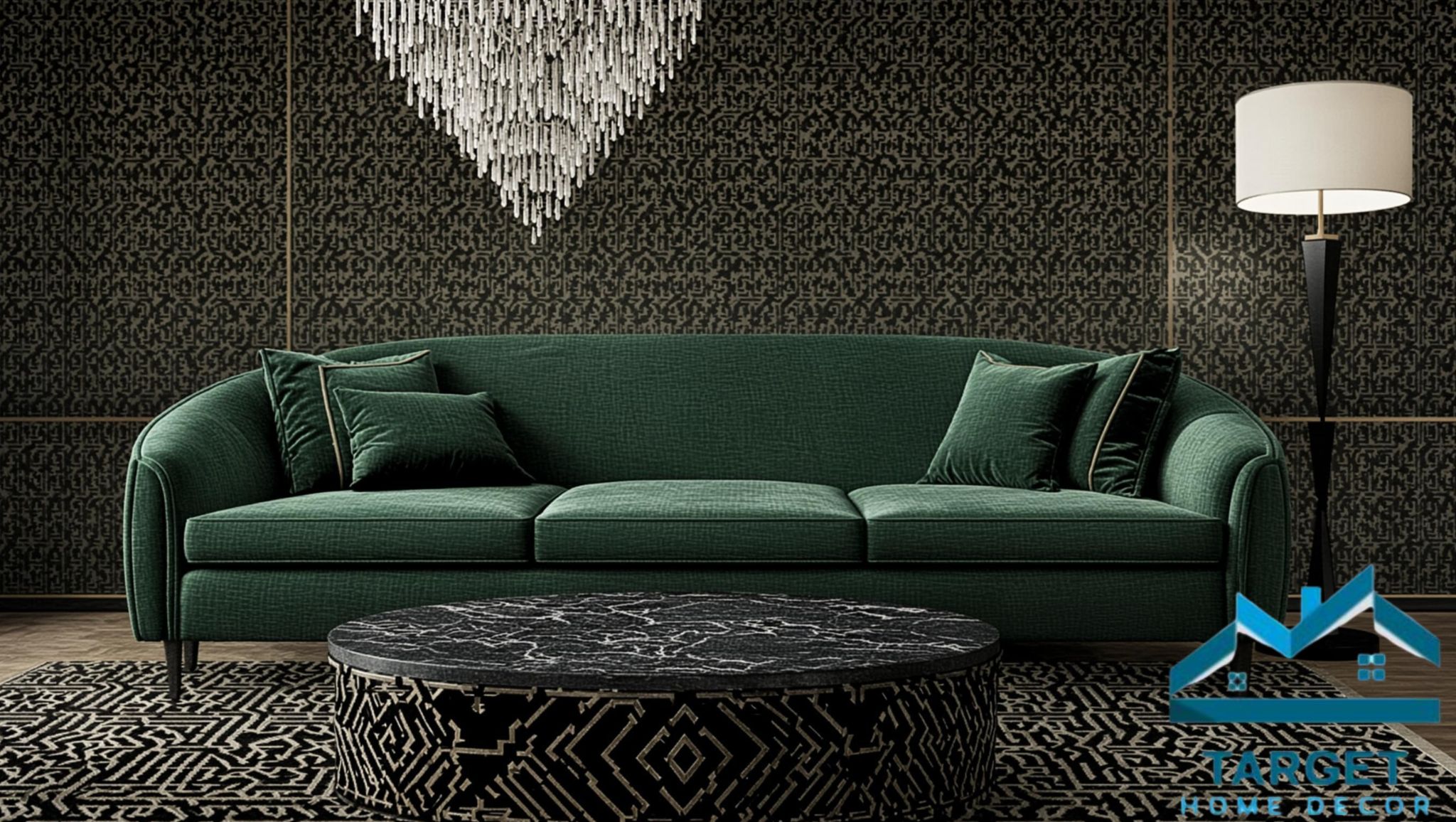
- Velvet sofas
- Curved armchairs
- Mirrored tables
- Lacquered cabinets
- Sculptural coffee tables
These pieces instantly establish the Art Deco aesthetic.
Art Deco Living Room Design
The living room offers the perfect opportunity to showcase Art Deco style.
Creating a Luxurious Atmosphere
Focus on:
- Statement seating
- Dramatic lighting
- Rich textiles
- Metallic accents
Layering textures helps create depth and visual richness.
Decorative Accessories
Popular additions include:
- Decorative mirrors
- Crystal vases
- Sculptural objects
- Geometric artwork
- Elegant candleholders
These details reinforce the room’s overall character.
![Luxury Art Deco bedroom with geometric wallpaper, velvet furnishings, and gold lighting]
Art Deco Bedroom Ideas
Bedrooms benefit from the elegance and comfort associated with Art Deco design.
Statement Headboards
A dramatic headboard often serves as the room’s focal point.
Popular options include:
- Velvet upholstery
- Curved silhouettes
- Channel tufting
- Geometric designs
Bedding and Textiles
Choose fabrics such as:
- Velvet
- Satin
- Silk-inspired materials
Rich textures contribute to the luxurious atmosphere.
Art Deco Dining Room Inspiration
Dining rooms naturally complement the formal elegance of Art Deco design.
Furniture Selection
Consider:
- Glossy dining tables
- Upholstered chairs
- Gold accents
- Symmetrical layouts
These elements create a refined entertaining space.
Decorative Lighting
A statement chandelier is often essential.
Look for fixtures featuring:
- Glass details
- Metallic finishes
- Geometric shapes
Lighting plays a major role in defining the room’s character.
Art Deco Bathrooms
Bathrooms can become luxurious retreats with Art Deco influences.
Material Choices
Popular options include:
- Marble surfaces
- Brass fixtures
- Black-and-white tile
- Mirrored accents
These materials instantly elevate the space.
Decorative Details
Add:
- Geometric mirrors
- Elegant sconces
- Metallic accessories
Even small updates can create significant visual impact.
Art Deco Wall Decor
Walls provide opportunities to introduce iconic Art Deco elements.
Wallpaper Designs
Popular choices include:
- Fan motifs
- Chevron patterns
- Metallic details
- Geometric repeats
Feature walls work particularly well in Art Deco interiors.
Artwork
Look for pieces featuring:
- Bold geometry
- Glamorous themes
- Symmetrical compositions
Artwork should complement rather than compete with other design elements.
Lighting in Art Deco Interiors
Lighting is one of the most important components of art deco home decor.
Signature Lighting Styles
Popular fixtures include:
- Globe lights
- Tiered chandeliers
- Geometric pendants
- Brass sconces
These designs serve both functional and decorative purposes.
Layering Light
Use a combination of:
- Ambient lighting
- Task lighting
- Accent lighting
This creates depth and enhances architectural details.
Blending Art Deco with Modern Design
Many homeowners appreciate Art Deco but prefer a contemporary interpretation.
Modern Art Deco Approach
Combine:
- Neutral foundations
- Art Deco furniture
- Geometric accessories
- Metallic accents
This balance feels current while preserving classic elegance.
Avoid Overdecorating
The goal is sophistication, not excess.
Select statement pieces carefully rather than filling every surface with decorative items.
Common Art Deco Decorating Mistakes
Avoid these frequent design errors:
- Using too many metallic finishes
- Overloading rooms with patterns
- Ignoring symmetry
- Choosing low-quality materials
- Mixing unrelated styles excessively
- Neglecting lighting design
- Creating visual clutter
Art Deco works best when elegance and balance remain priorities.
Why Designers Love Art Deco
Professional designers frequently revisit Art Deco because it offers:
- Timeless appeal
- Luxurious aesthetics
- Strong visual identity
- Versatile styling opportunities
Few styles communicate sophistication as effectively.
Its ability to blend historical charm with contemporary living continues to make it highly desirable.
FAQ
What is art deco home decor?
Art deco home decor is an interior design style inspired by the 1920s and 1930s, featuring geometric patterns, luxurious materials, rich colors, and elegant symmetry.
What colors are used in Art Deco interiors?
Popular colors include emerald green, navy blue, black, gold, burgundy, cream, and silver.
Is Art Deco still in style?
Yes. Art Deco remains popular because of its timeless elegance and ability to integrate with modern interiors.
What materials define Art Deco design?
Marble, velvet, brass, chrome, glass, lacquered wood, and mirrored surfaces are commonly used.
Can Art Deco work in small homes?
Absolutely. Strategic use of mirrors, lighting, and carefully selected furniture can make small spaces feel luxurious and sophisticated.
What furniture is associated with Art Deco?
Curved sofas, velvet chairs, mirrored tables, glossy cabinets, and geometric furnishings are common choices.
How do I modernize Art Deco interiors?
Pair Art Deco accents with contemporary furniture, neutral palettes, and streamlined layouts.
What is the difference between Art Deco and Art Nouveau?
Art Deco emphasizes geometry and symmetry, while Art Nouveau focuses on organic curves and nature-inspired forms.
Conclusion
The enduring appeal of art deco home decor lies in its unique combination of glamour, craftsmanship, and timeless sophistication. Through bold geometry, luxurious materials, rich colors, and carefully curated details, Art Deco interiors create spaces that feel elegant and memorable. Whether you embrace the style fully or incorporate a few iconic elements, Art Deco offers an opportunity to transform ordinary rooms into extraordinary environments filled with character, confidence, and lasting beauty.